Arcadia Wood Flooring handles water damaged hardwood floor repair in Arcadia, CA, with more than 20 years of drying, replacing and refinishing boards after leaks, overflows and wet thresholds. A floor soaked by a dishwasher line is a different repair from one stained over months by rain blowing under a sliding door, and we sort out which one you have before cutting anything. The first visit is about the water, not the wood.
That means moisture meter readings across the wet area and the dry boards around it, a look at the subfloor and crawl space where there is access, and photos of everything before it is touched. Those records guide the drying decisions and give an insurance adjuster something concrete to work from.
Once the floor is dry, we repair only what the readings and the damage call for. Boards that can flatten are left to do so, boards with deep black water stain are replaced, and the finished area is blended so the repair does not announce itself.
Finding Where The Water Went
Moisture Readings Before Any Repair
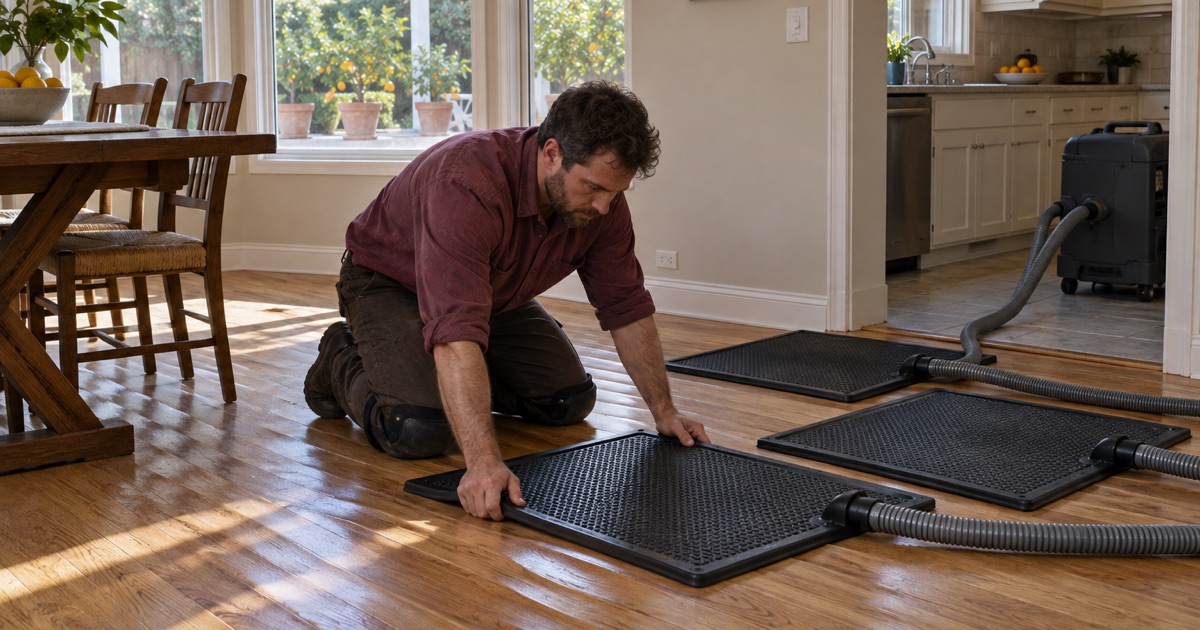
Water spreads under hardwood farther than the visible damage suggests, traveling along the subfloor and between boards before showing up as cupping somewhere else. We map moisture readings across the room, record the highest points, and compare them with dry boards in the same floor to set a target for drying.
Those readings are taken again over the following days. Repairs start when the wood and subfloor are within an acceptable range of normal, which prevents new boards from being installed into a floor that is still moving.
Threshold Water By Sliding Doors
Threshold water damage is common where rain blows against sliding glass doors or water runs off a patio toward the house. The first sign is often gray boards right at the door, followed by cupping and eventually black staining as the wood stays wet season after season.
We check the boards, the subfloor under the doorway and the condition of the door sill. Replacing the damaged wood without correcting how water reaches it only sets up the same repair next winter, so the source is flagged for correction.
Leaks From Plumbing And Appliances
Supply lines to refrigerators, dishwashers, sinks and toilets can leak slowly for weeks. By the time boards cup or a soft spot appears, water may have soaked the subfloor and reached the crawl space.
We confirm the leak has been repaired, then check how far the damage extends in the finished floor and below it. A sudden overflow and a slow drip leave different patterns, and the difference matters for both repair and insurance.
Drying, Cupping And Crowning
Why Sanding A Wet Floor Backfires
Cupped boards have edges higher than their centers because the underside absorbed more water than the top. If a cupped floor is sanded flat while still wet, the edges lose wood, and when the boards dry they settle into a crowned shape.
We wait for readings to settle before sanding. Patience here often means keeping boards that would otherwise have to be replaced, and it avoids turning a temporary cup into permanent crowning.
Buckling And Boards Lifting Off The Subfloor
When boards swell with nowhere to expand, they can push against each other and lift off the subfloor. Buckling often shows up after large leaks or in floors installed without an adequate expansion gap.
Buckled sections usually need boards removed so the rest of the floor can settle. We check fasteners and subfloor as we go, then reinstall or replace boards once moisture levels are acceptable.
Stains, Board Replacement And Blending
Gray Boards And Black Water Stain
Gray boards usually show water sitting in or just under the finish, and the discoloration can sometimes be sanded out. Black water stain means water has reacted with tannins deep in the wood, especially common in oak, and sanding rarely reaches the bottom of it.
We test the depth of discoloration before recommending sanding alone. Boards with stains that run too deep are replaced so the repaired area does not keep a dark shadow under the new finish.
Weave-In Board Replacement
Damaged boards are removed in staggered lengths, and replacement boards are woven into the pattern so end joints do not line up. That method blends new wood into strip and plank floors better than cutting a square patch.
Replacement boards are matched for species, width and grain. After installation, the area is sanded level with the surrounding floor and finished to blend.
Matching Color And Finish After Water Damage
New wood is lighter than older boards that have aged under finish, and water-damaged floors often show uneven color around the repair. Sanding and finishing the full room or a natural section between doorways usually gives the most even result.
Every finish we apply meets the South Coast air district limit of 275 grams per liter for wood coatings. We show you the blended area before the final coat so you can judge the match.
Documentation For Insurance Claims
Photos, Readings And Written Scope
Adjusters work from evidence, and the most useful evidence is collected before boards are removed or cleaned. We photograph the damage, record moisture readings with locations and dates, and write a repair scope that lists what needs replacement, drying or refinishing.
That documentation helps the adjuster understand what happened and why a particular repair method is needed. Whether a claim is paid is always the insurance company’s decision, but clear records make the conversation simpler.
- 20+ Years on Wood Floors
- Room-by-Room Schedules
- Stairs Priced by the Step