Arcadia Wood Flooring builds and refinishes hardwood stair treads in Arcadia, CA, and after 20+ years on wood floors we price stairs the way the work is actually done: by the tread, riser and nosing, not folded into a square-foot number. You see exactly what the stairs cost next to the floor they connect, which makes it easy to decide whether to include them now or later.
Stairs take more handwork than any other part of a wood floor. Each step is measured separately, because older houses rarely have treads that are identical, and every piece has to meet the stringer, the wall and the step above it cleanly. A gap or a loose tread on stairs is not cosmetic, since it is something people step on every day.
We replace worn treads, add retrofit treads over structurally sound stairs after carpet comes off, refinish existing hardwood stairs, and blend the result into the floors at the top and bottom.
Stair Treads, Risers And Nosings
Solid Hardwood Stair Treads
Solid hardwood treads are cut from species such as red oak, white oak, hickory and hard maple, and are thick enough to span the stringers without flexing. We measure each step individually, including depth, width and how the tread meets the wall, then cut and fit every piece so it sits tight.
Treads are glued and fastened to the structure below so they stay quiet. A tread that squeaks or rocks is usually one that was not fully supported or bonded, and that is fixed during installation rather than left for later.
Risers And How They Change The Look
The riser is the vertical face behind each tread. Wood risers can match the treads for a continuous look, while painted risers create contrast and brighten a stairwell.
We discuss riser choices before ordering materials, since they affect both cost and scheduling. Painted risers are finished before treads go down, while matching wood risers are finished together with the treads.
Stair Nosing And Landing Treads
Stair nosing is the rounded front edge of a tread, and a landing tread finishes the edge where a floor meets the top of the stairs. These pieces tie the stairs into the surrounding hardwood.
Nosing profile and overhang are matched from step to step so the stairs look consistent and feel predictable underfoot. At landings, we plan how floor boards meet the landing tread so the transition is clean and flush.
Retrofit Treads And Carpet Removal
What Is Under Carpeted Stairs
Carpeted stairs often hide treads that were never meant to be seen, made from lower-grade wood or covered in staples and glue. Sometimes they hide solid oak that can be refinished.
We pull back a section of carpet before quoting to see what is there. That check decides whether the treads can be refinished, need retrofit treads, or should be replaced.
Retrofit Treads Over Existing Stairs
Retrofit treads cover structurally sound existing stairs without removing them. The existing nosing is usually cut back so the new tread sits flush, and a new riser cover finishes the face of each step.
This approach avoids the cost and disruption of rebuilding the stair structure. It works best when the existing stairs are level, solid and not squeaking.
Height Changes At The Top And Bottom Steps
Adding a retrofit tread or new flooring changes step heights, especially at the first and last steps. Uneven riser heights make stairs awkward and unsafe.
We measure the full run of stairs and the floors at both ends, then plan tread thickness and any floor adjustments to keep risers consistent. That planning happens before any tread is cut.
Refinishing Existing Hardwood Stairs
Sanding Treads By Hand And Machine
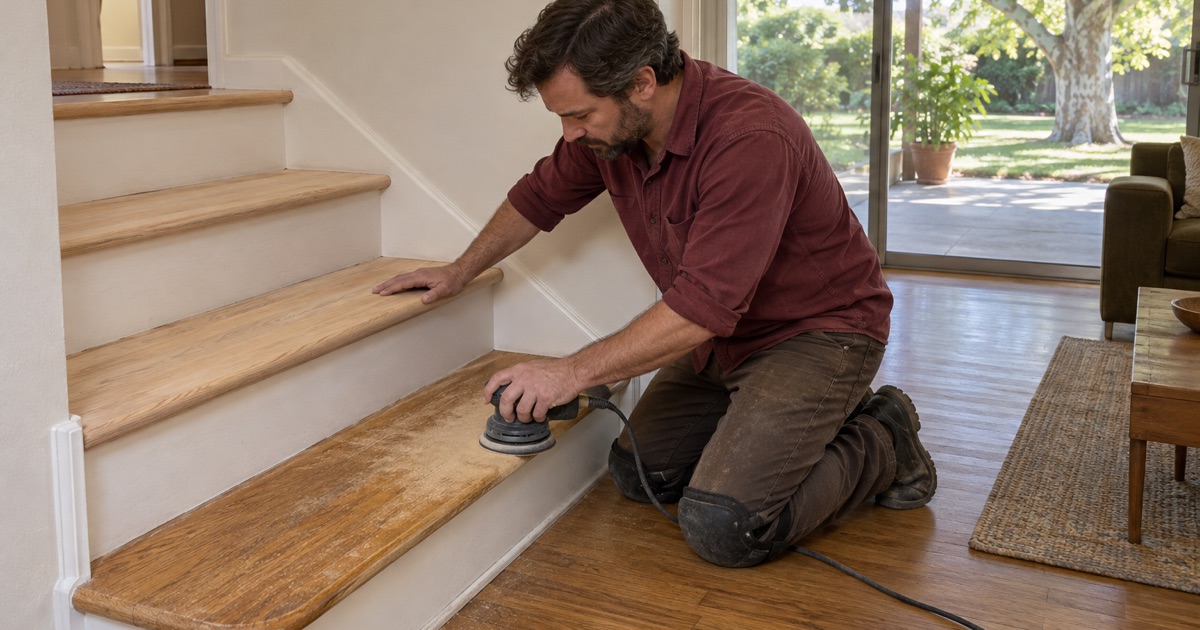
Stairs cannot be sanded with a large drum sander like an open floor. Treads, nosings and corners are sanded with smaller tools and careful hand work to reach every edge.
We work through the grits step by step and check each tread for scratches before finishing. Corners and nosing edges get extra attention because they show wear first.
Stain, Sheen And Grip
Stain on stairs is matched to the connecting floors, while sheen affects both look and footing. Satin or matte finishes give better grip than gloss and hide scuffs better.
Every finish we use meets the South Coast air district limit of 275 grams per liter for wood coatings. We test stain on a tread or scrap before finishing the full staircase.
Keeping Stairs Usable During Work
Stairs are often the only route between floors. Where the layout allows, we finish alternating steps so the staircase remains usable with care during the job.
The written schedule shows when stairs are closed, when careful use is fine, and when normal traffic can return. Households with older relatives or young children can plan around that timing.
Stairs As Part Of A Larger Floor Project
Matching Stairs To New Or Refinished Floors
When floors and stairs are done together, species, stain and finish can be matched from the start. Doing stairs later is possible, but new finish on stairs may look different from floors that have aged for a few years.
We plan stair work within the same schedule as the floors when possible. That keeps colors consistent and reduces the number of times the household is disrupted.
- 20+ Years on Wood Floors
- Room-by-Room Schedules
- Stairs Priced by the Step