Wood Floor Refinishing and Repair in Arcadia

Parquet, oak strip and newer wide plank floors assessed, restored and finished by a crew with 20+ years on wood floors.

Arcadia Wood Flooring has spent 20+ years sanding, repairing and installing hardwood floors in Arcadia, CA, with wood floor refinishing, parquet restoration, hardwood floor repair and new hardwood floor installation filling most of our calendar. We also rebuild subfloors, save water damaged boards, build stair treads, refinish engineered hardwood, lay wide plank flooring, and handle screen and recoat work for floors that only need a fresh top coat. Every job starts on the floor itself rather than on a price sheet, because the right answer depends on what the boards, the finish and the structure underneath are actually doing.

Much of what we work on is older than the people who own it. Oak strip and parquet put down decades ago often still have sandings left in them, and we would rather restore a floor like that than tear it out for something that will not last as long. Newer houses bring different questions, from engineered veneers that cannot take a full sand to wide planks that open and close with the seasons.

Before we quote, we look at build year, moisture, wear layer and finish history, and explain what each one means for your floor. You get a written scope, a finish that is legal to apply here, and a room-by-room schedule, so you know what happens, in what order, and when the house is fully yours again.

Get Your Free Quote

Fast response • No obligation

So we can reach you about your request.

So we can send you a confirmation after you submit this inquiry form.

  • 20+ Years on Wood Floors
  • Room-by-Room Schedules
  • Stairs Priced by the Step

What we do

Our Services

Wood floor refinishing, repair and installation in Arcadia, CA

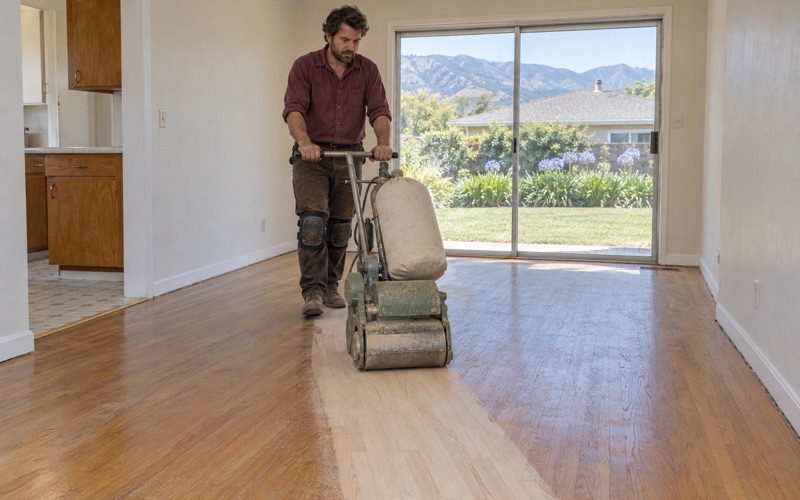
Worker running a drum sander along red oak strip flooring in the dining room of a 1950s ranch house in Arcadia, bare wood opening up behind the machine.

Wood Floor Refinishing

Sanding and refinishing for oak strip, parquet and engineered floors, planned around build year, remaining wood and a finish legal in this air district.

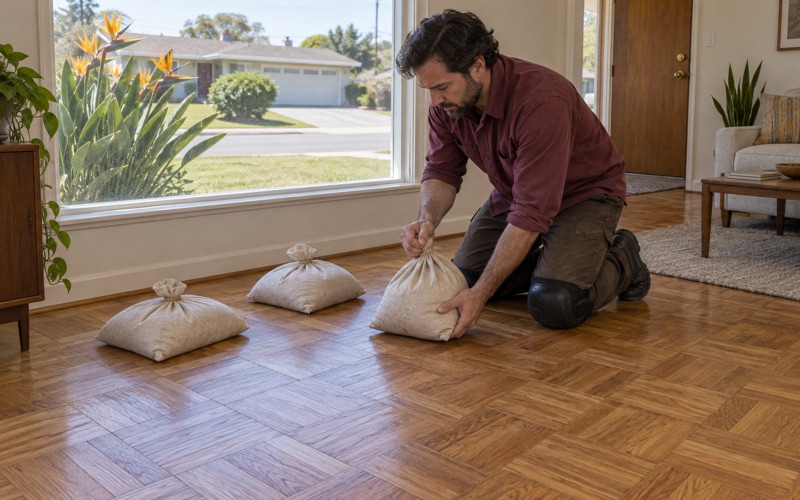
Worker setting a sandbag onto reglued oak parquet squares in a 1960s Arcadia living room so the adhesive cures with the squares held flat.

Parquet Flooring

Parquet restoration and installation: loose and hollow tiles reset, missing pieces matched, adhesive identified first, and new patterns laid true.

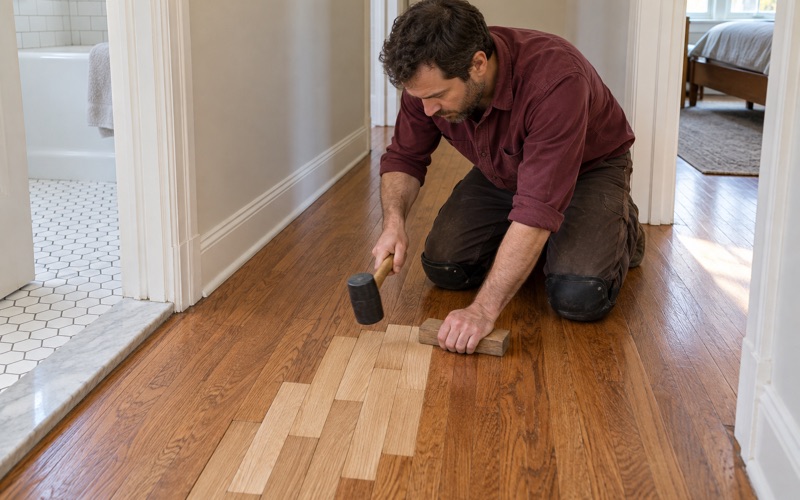
Worker tapping a replacement oak board tight into a laced repair in an Arcadia floor, the new strips staggered into the old.

Hardwood Floor Repair

Board replacement, weave-in repairs, squeak and nail pop fixes, and stain removal, with the cause of the damage found before the wood is touched.

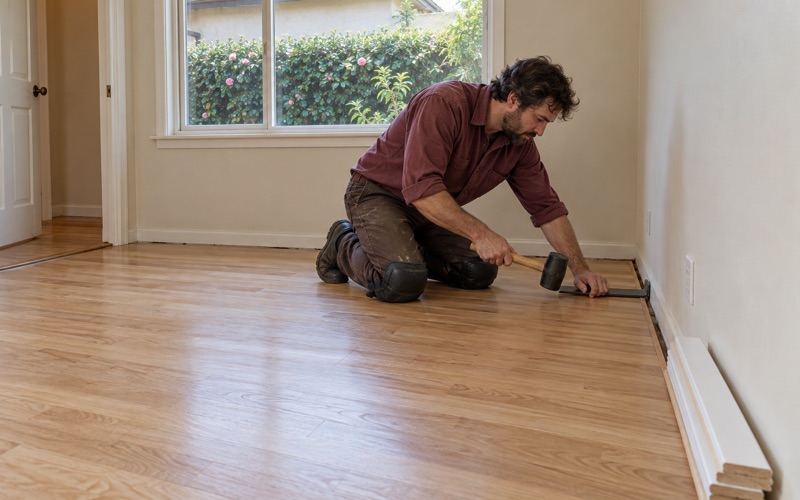
Worker pulling the last row of new white oak flooring tight against a wall with a pull bar in a bedroom of an Arcadia ranch house.

Hardwood Floor Installation

New solid and engineered hardwood installed over slabs and raised foundations, with moisture testing, acclimation and expansion gaps done properly.

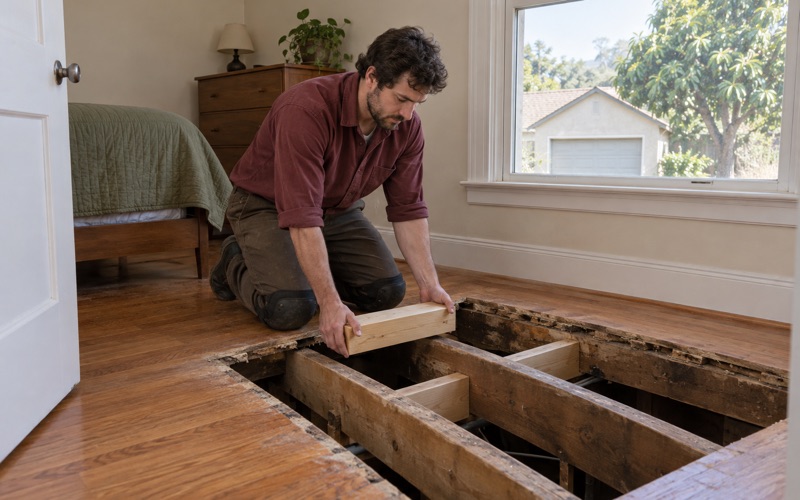
Worker dropping new solid wood blocking between floor joists where a sagging section of floor has been opened up in an Arcadia house.

Subfloor Repair

Rotted plywood and board subfloor replaced, joists sistered, and slabs prepared, so the finished wood floor above stays flat, quiet and solid.

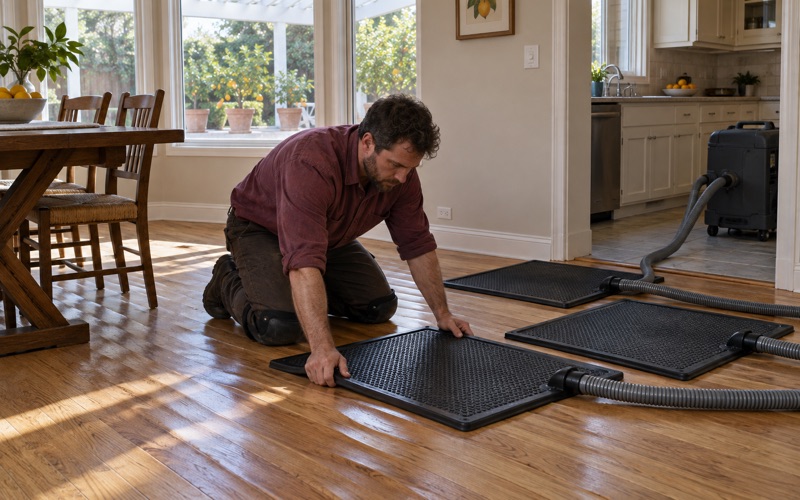
Worker pressing a drying mat onto cupped oak boards beside a kitchen doorway in an Arcadia home after a dishwasher leak.

Water Damaged Hardwood Floor Repair

Cupped, gray or black-stained boards after a leak or wet threshold, dried and measured first, then repaired or replaced and blended into the floor.

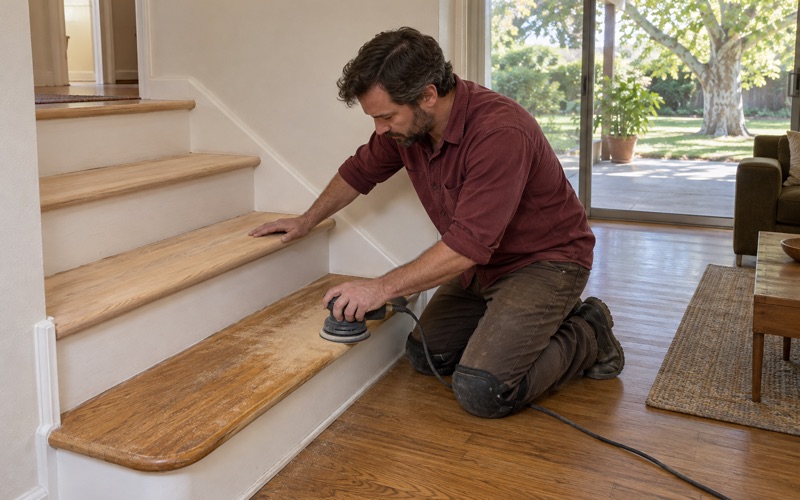
Worker sanding an oak stair tread by hand with a palm sander on the steps down to a sunken den in an Arcadia ranch house.

Hardwood Stair Treads

New and retrofit hardwood stair treads, risers and nosings, priced by the step and finished to match the floors at the top and bottom of the stairs.

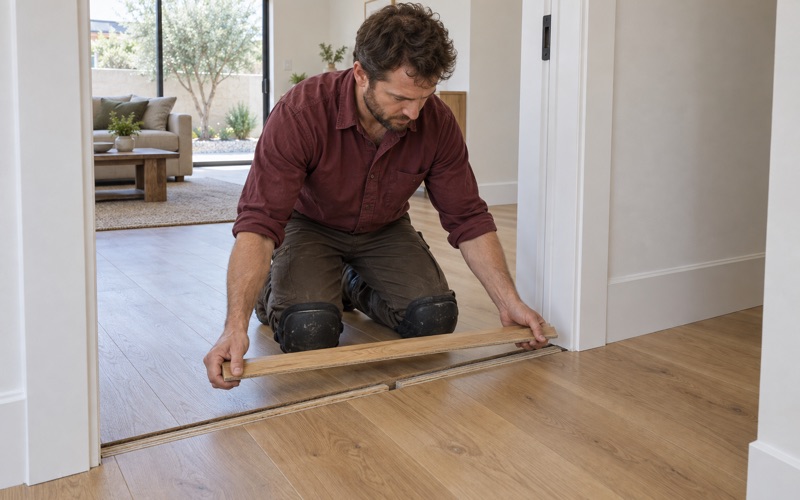
Worker lifting a doorway threshold off engineered oak flooring in an Arcadia home to see how thick its wear layer is before any sanding is promised.

Engineered Hardwood Refinishing

Engineered floors refinished only as far as the wear layer allows: screen and recoat for thin veneers, careful sanding where there is wood to spare.

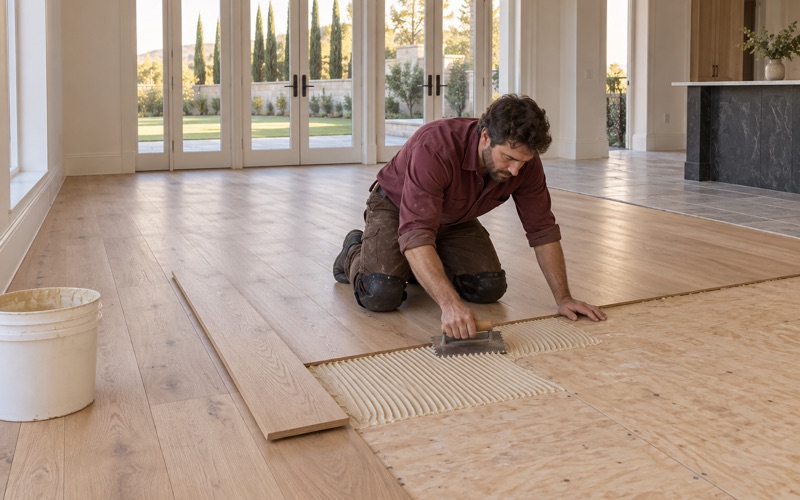
Worker spreading flooring adhesive with a notched trowel ahead of wide white oak planks in the great room of a large new Arcadia house.

Wide Plank Flooring

Wide plank hardwood installed, repaired and refinished, with moisture measured and recorded before seasonal gaps or cupping are blamed on the boards.

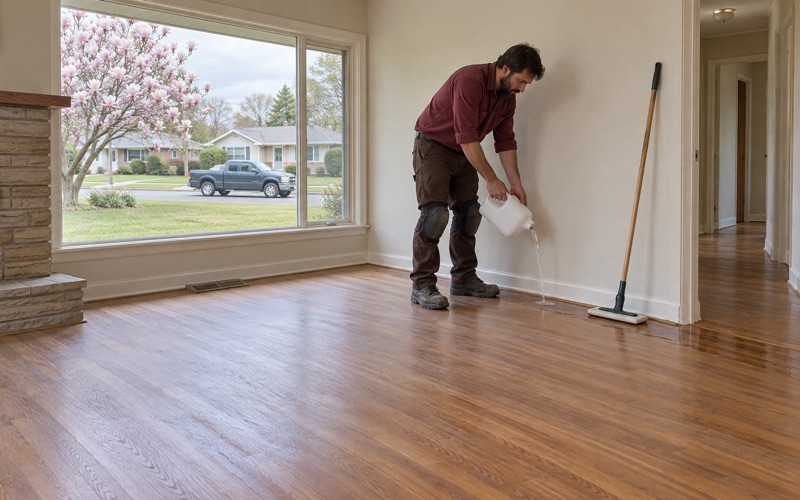
Worker pouring a line of fresh finish onto a screened oak floor in an Arcadia living room before spreading the new coat.

Screen And Recoat Hardwood Floors

A lighter alternative to full sanding for dull, lightly worn hardwood: the finish is abraded, cleaned and recoated after an adhesion test.

Two Decades On Hardwood Floors

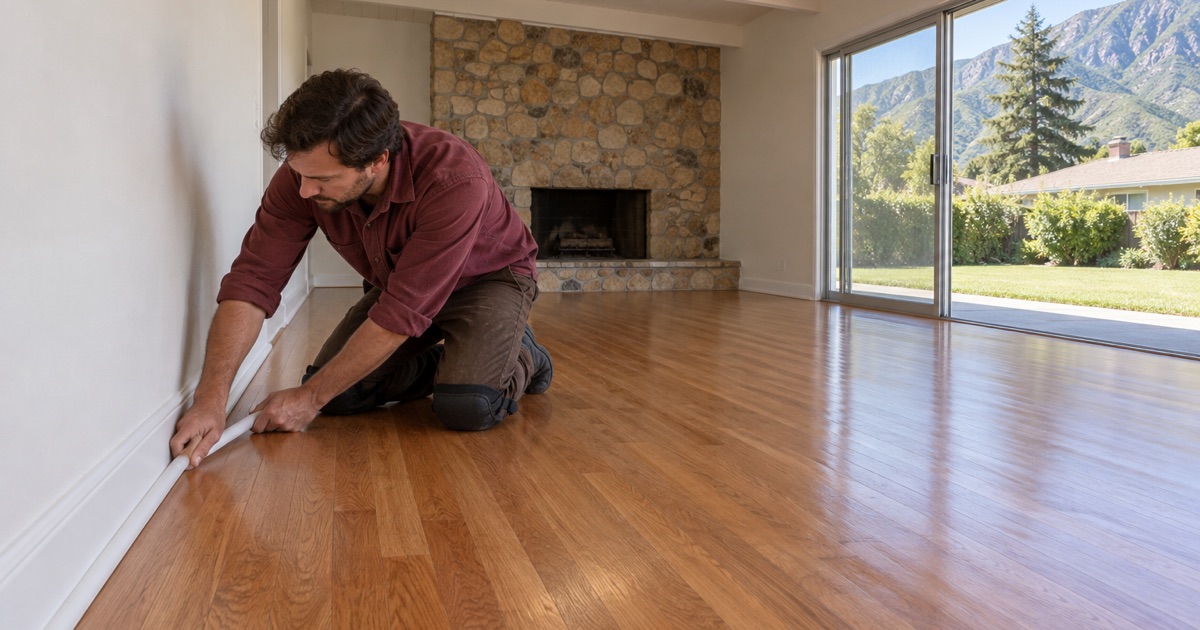
Worker pressing new shoe molding into place along a freshly refinished oak floor in a 1950s ranch house in Arcadia, the San Gabriel Mountains beyond the sliding door.

20+ Years Of Wood Floor Work

Arcadia Wood Flooring has been sanding, repairing and installing wood floors for more than 20 years. That span covers the full range of what turns up under carpet and furniture: oak strip, parquet tile, fir, and the engineered and wide plank floors that came later. Experience is what lets us tell a floor that needs a sander from one that only needs a recoat before any money is spent.

Why Choose Arcadia Wood Flooring

Build Year Checked First

Every sanding job starts with the house’s build year, because most Arcadia housing predates 1980 and pre-1978 finish and paint layers fall under the federal lead-safe renovation rule, so dust from old coatings is handled under the right work practices rather than blown through the house by a crew that never asked when it was built.

No finish goes down unless it meets the South Coast air district’s limit of 275 grams per liter for wood coatings, so the product sealing your floor is one that may legally be applied in Arcadia rather than whatever a national catalog ships to every state.

Wear Layer Measured Before Promises

Never do we promise a full sand on an engineered floor until the wear layer has been measured, since a thin veneer in a newer house can take a screen and recoat but not a sanding, so the core stays hidden rather than sanded through by an installer quoting from a photo.

Parquet Adhesive Answered First

Old adhesive under lifting parquet is a question we answer before a single tile comes up, so black mastic that may need special handling is identified first rather than scraped on a guess and spread across the room as dust.

Wide Plank Gaps Measured

Wide plank floors in Arcadia’s larger newer houses get moisture readings, written down, before any board is blamed for a gap, so ordinary seasonal movement is recognized for what it is rather than treated as a defect and torn out at your expense.

HOA Areas Without The Wait

Floor projects inside the city’s homeowners association areas are planned without waiting on design review, since the city resolution keeps interior-only work outside that review, so your start date follows the floor itself rather than a review your job does not need.

Parquet, Oak Strip And Other Mid-Century Floors

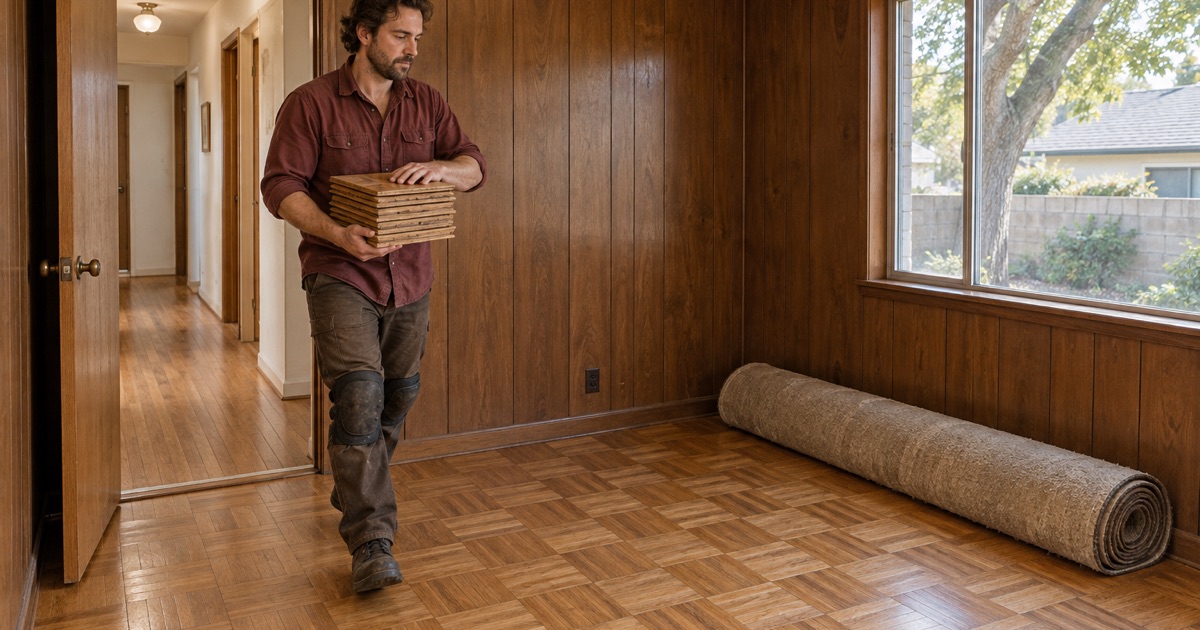
Worker carrying a stack of original oak parquet squares across a mid-century den in Arcadia where the parquet meets an oak strip hallway.

Resetting Loose Or Hollow Parquet Tiles

Loose parquet usually announces itself as a click underfoot or a hollow sound when a tile is tapped with a knuckle. We map every hollow and lifting tile, lift only the ones that have let go, and reset them before any sanding begins. Fixing loose pieces first matters because a drum sander passing over hollow parquet can tear a tile out or chew its edges.

Black Mastic Under Old Parquet Tile

Many older parquet floors were set in black mastic or cutback adhesive, and some of those products are not something you want sanded or scraped into the air. We look at what sits under a lifting tile and treat the adhesive as a question to answer before tiles come up. That keeps an unknown layer from becoming dust across the whole house.

Oak Strip Flooring Hiding Under Carpet

Pulling back a corner of wall-to-wall carpet often turns up oak strip flooring that has been covered for decades. We check tack strip damage, staple holes, stains and board thickness to judge whether it can be sanded back to clean wood. Many of these floors can be saved for far less than a new installation, a few cannot, and we tell you which one you have.

Honey Oak Parquet: Keep It Or Lighten It

Honey oak and amber-toned parquet reads as dated to some owners and as original character to others. We can refinish the floor in its existing tone, or sand it back and use a clear waterborne finish or stain to move it lighter, with sample patches on your own floor before anyone decides. Wood that has aged for decades will not turn white, so we set that expectation early.

Matching Missing Parquet Blocks And Strip Boards

A parquet floor with a missing block near a doorway, or oak strip patched with the wrong species, stands out once it is refinished. We match species, grain direction and board width, then weave replacement pieces into the pattern so the repair blends under one finish. Matching happens before sanding starts, because a repair sanded separately rarely lines up with the field around it.

How Many Sandings An Old Floor Has Left

A solid oak strip floor that is 60 years old may already have been sanded more than once, and every pass removes wood above the tongue. We pull a floor register or check a threshold to see how much wood remains before recommending a full sand. When the margin is thin, a screen and recoat or a gentler abrasive grit sequence can carry the floor through another cycle.

Lead-Safe Floor Work In Pre-1978 Houses

The EPA Renovation, Repair and Painting Rule covers work that disturbs paint in pre-1978 housing, and sanding along painted baseboards and shoe molding can do exactly that. We confirm the build year first and plan containment, dust control and cleanup around the answer. That step happens before a sander is booked, not after dust is already in the air.

Original Wood Floors In A Fixer

Buyers who take on an older house to renovate often find original oak strip or parquet under carpet, vinyl or tile. We assess those floors early, ideally before walls come down and other trades start rolling carts across them, so you can decide whether to protect and refinish the wood or plan around replacing it. Refinishing last, after the heavy work, keeps the new finish from being scratched on day one.

When The Floor Has Started To Go Wrong

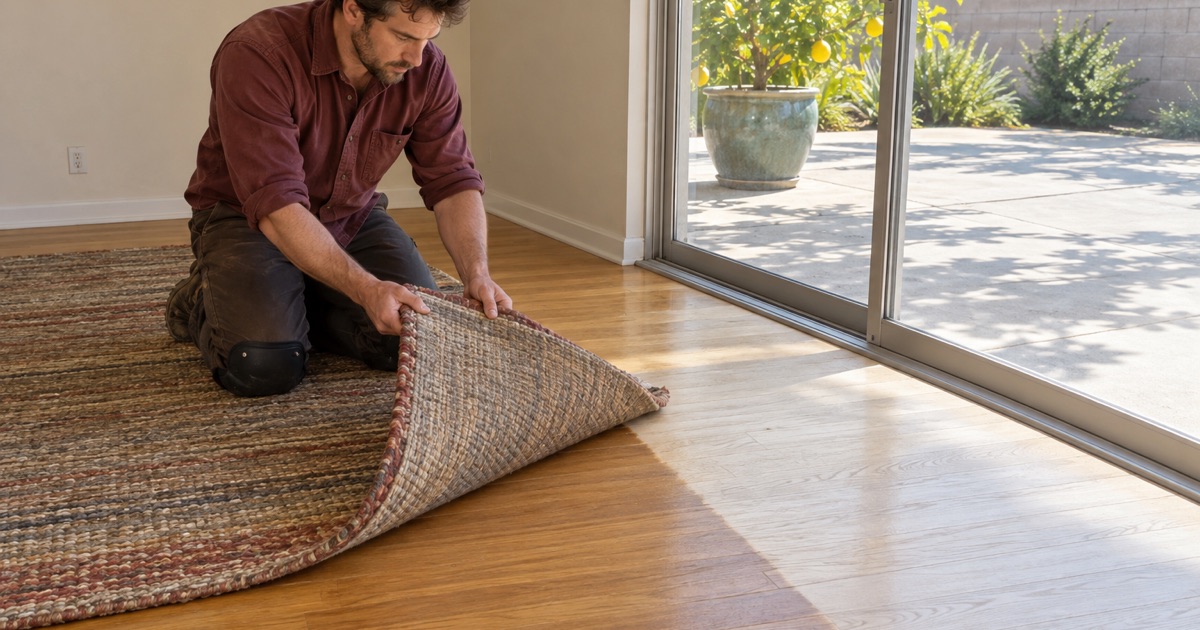
Worker folding back an area rug beside a sliding glass door in an Arcadia house to show where sun has faded the oak floor around it.

Gray Or Black Boards By A Sliding Door

Threshold water damage by a sliding glass door shows up as gray boards first and black water stain later, once water has worked deep into the wood fibers. We take moisture readings, check the subfloor under the doorway, and replace or weave in boards where the stain runs too deep to sand out. When a claim is involved, the readings and photos are recorded so an adjuster has something usable.

Sun Fading Near Big Glass Doors

Rooms with large sliding doors and picture windows often show UV fading, with a pale band where sunlight lands and a darker rectangle where a rug once sat. Sanding removes the faded surface and evens the color across the room, and the new finish starts the aging clock over evenly. Shifting rugs now and then and using window coverings slows the pattern from returning.

Seasonal Gaps In Wide Plank Floors

Seasonal gapping appears when indoor relative humidity drops and wide planks shrink, leaving gaps that often close again in wetter months. We measure moisture content and record the readings before recommending any repair. Filling a seasonal gap in the dry season can cause crushing or compression set when the boards swell back, so the correct fix is often monitoring rather than filler.

Cupped And Crowned Hardwood Boards

Cupping, where plank edges sit higher than their centers, means moisture is reaching the boards from below, while crowning is often a floor that was sanded flat while still cupped. We use a moisture meter on the boards and the subfloor to find the source, whether a crawl space, a plumbing leak or a slab. Sanding a cupped floor before it dries out only turns it into a crowned one later.

Sloping, Sagging Or Bouncy Floors

A sloping floor, a sagging floor or a bouncy floor points below the finished wood, often to a floor joist, a damaged board subfloor, or settling in a raised foundation. We check from the crawl space where there is access and look for cracked or undersized joists that can be sistered. Refinishing a floor on a failing structure wastes the finish, so structure comes first.

Drywood Termite Frass Or Old Nail Holes

Drywood termites push small, hard pellets called frass out through kick-out holes, and the piles often collect on the floor below the damage. Old nail holes and flooring staple holes produce no pellets and usually line up along board edges. When we find frass, we recommend a Wood Destroying Pests and Organisms Inspection Report before any board replacement, since patching wood that is still infested only moves the problem.

Soot, Ash And Smoke Odor On Wood Floors

Smoke damage from a nearby fire can leave soot and ash residue in the finish and between boards, along with a smell that lingers. Light surface residue can often be cleaned and recoated, while heavier contamination may need sanding to bare wood and odor sealing before new finish. We photograph and record the condition for your insurance adjuster before cleaning anything.

Squeaks, Nail Pops And Hollow Spots

Most squeaks come from boards rubbing against each other or against loose flooring cleats, and they are annoying rather than dangerous. Nail pops and hollow spots under a glue-down floor are different, since they can mean fasteners have backed out or adhesive has let go. We sort out which is which and fix structural causes from below where possible, so the repair does not scar the finished surface.

Peeling Veneer On Engineered Hardwood

Veneer delamination on engineered hardwood looks like the top layer lifting at the edges or bubbling in the middle of a plank. It usually follows water exposure or a bond failure in the product, and sanding cannot fix it. We replace affected planks with a matching product where one is still available, or explain the choices honestly when it is not.

Sanding, Finishes And Living Through The Work

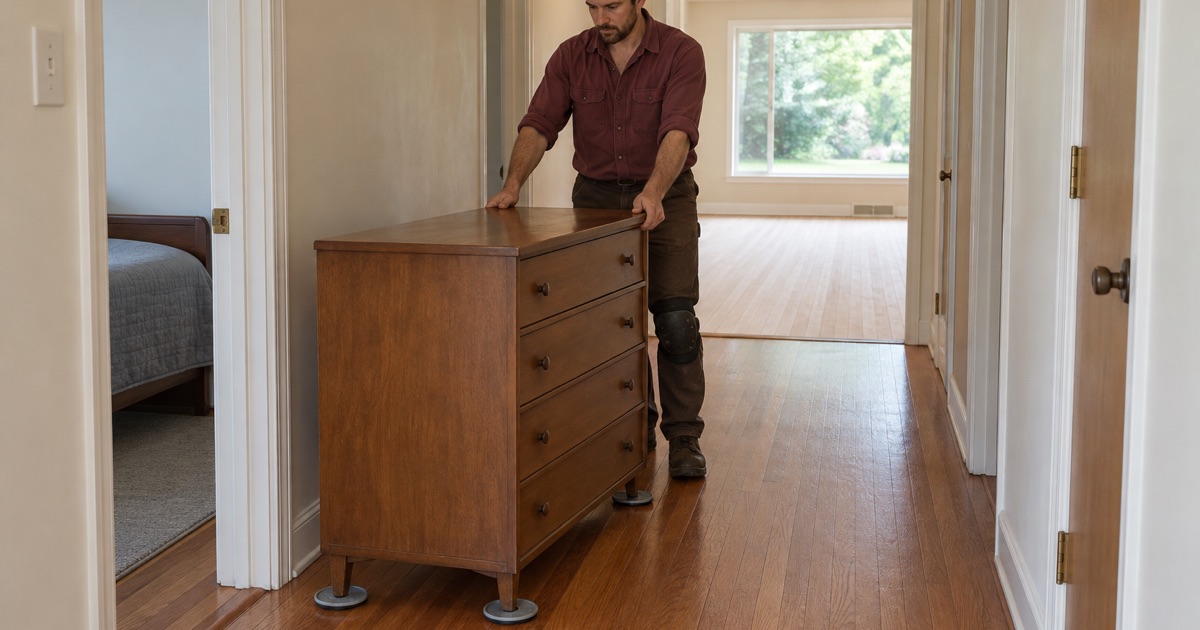
Worker sliding a dresser on furniture sliders out of a room about to be sanded, so the rest of the Arcadia house stays in use.

Screen And Recoat Or A Full Sand

A screen and recoat, sometimes called a buff and coat, lightly abrades the existing top coat and adds a fresh layer of finish. It works when the finish is dull or lightly scratched but still intact above the wood. Once scratches reach bare wood, the finish is worn through, or the floor is stained, only a full sand fixes it, and we tell you plainly which one your floor needs.

Chatter Marks, Swirls And Skipped Grits

Chatter marks are the evenly spaced ripples a drum sander leaves when it bounces, and edger swirl is the circular pattern left along walls. Drum marks and scratches from a skipped grit often stay invisible until stain or finish goes on. We work through each grit in order and inspect the floor under raking light before any finish is applied.

What Dustless Sanding Actually Captures

Dustless sanding means the drum sander, edger and orbital sander are connected to vacuum extraction that captures most dust at the source. It greatly reduces what settles on your belongings, but no system catches every particle. We still set up dust containment at doorways and vents, especially in older houses where earlier finish and paint layers deserve caution.

Waterborne, Oil-Modified And Hardwax Oil Finishes

Waterborne polyurethane dries clear, cures quickly and keeps light woods from ambering. Oil-modified polyurethane warms the color and asks for more time between coats, while hardwax oil soaks into the wood and can be spot-repaired rather than recoated across the whole floor. We lay out durability, look, maintenance and recoat window for each against how your household uses the room.

Finish Rules In The South Coast Air District

South Coast Air Quality Management District Rule 1113 sets a wood coatings VOC limit of 275 grams per liter for products applied in the district. Some finishes sold nationally or online do not meet it, even when they are easy to buy. We choose from products legal to apply here, so the finish on your floor meets the rule rather than creating a problem later.

Cloudy, Sticky Or Peeling Floor Finish

A white haze or cloudy finish usually means moisture was trapped or a coat went on too heavy. A sticky finish often points to product that never cured, and finish peeling generally follows poor adhesion over wax, oil soap residue or an incompatible coating. We find the cause before recoating, because a fresh coat over the same problem simply repeats it.

Site-Finished Or Prefinished Hardwood

A site-finished floor is sanded and coated in place, so the surface is flat and the finish seals the seams between boards. A prefinished floor arrives with a factory coating and usually beveled edges, goes down faster, and skips the on-site drying wait. We explain how each handles spills, repairs and future refinishing so the choice rests on more than install-day convenience.

Cure Times, Coats And When Furniture Returns

Most finishes allow careful sock traffic within hours to a day, but full cure takes much longer, and rugs and heavy furniture wait the longest. Timing shifts with the product, temperature and humidity. We put it in writing room by room, so you know when you can walk in, when furniture comes back and when rugs go down.

Floor Refinishing In A Multigenerational Household

Refinishing floors while grandparents, parents and children share one house takes more than a crew and a start date. We plan the order of rooms, keep a path open to a bathroom and kitchen where the layout allows, and set out when each space can be used again. A written schedule lets everyone plan meals, sleep and daily routines around the work instead of guessing.

New Floors, Bigger Houses And Paying For It

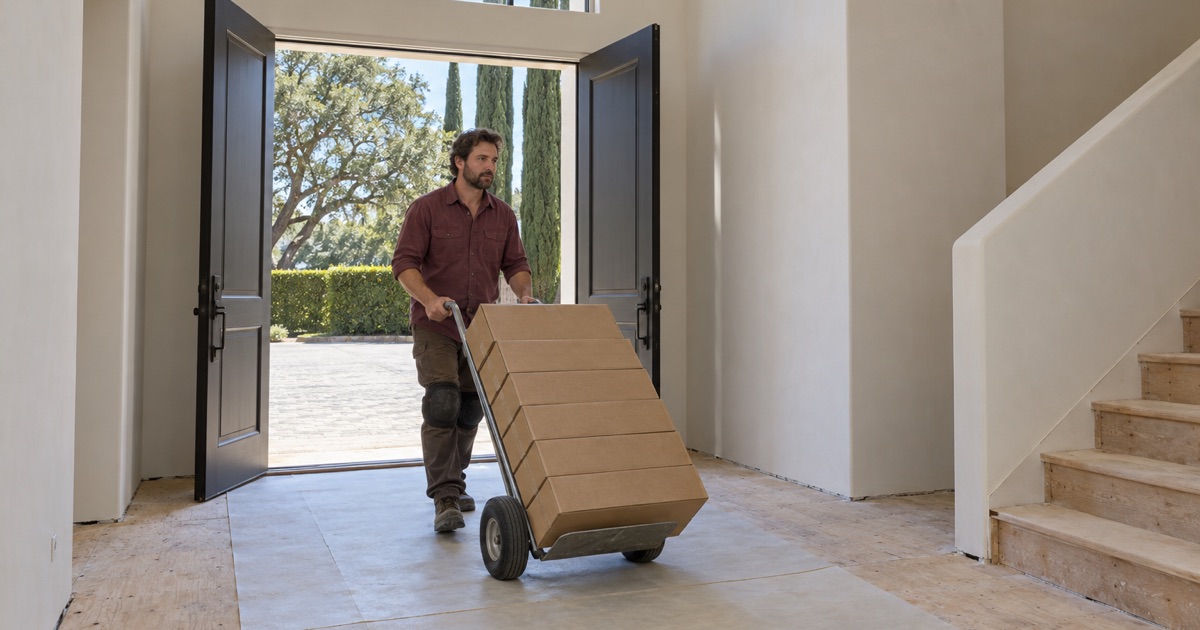
Worker wheeling a hand truck of engineered oak flooring cartons into the two-story entry of a large new house in Arcadia.

Wide Plank, Herringbone And Chevron Floors

Wide plank flooring suits larger rooms because fewer seams let the grain run across the space, while herringbone and chevron patterns add movement to entries, dining rooms and long halls. Wider boards move more with humidity, so species, cut and acclimation matter more than with narrow strip. Quartersawn and rift sawn boards move less across their width than plainsawn ones, which helps a wide floor stay tight.

Solid Or Engineered Over Slab Or Raised Foundation

Solid hardwood is typically nailed down over a plywood subfloor or board subfloor on a raised foundation. Over slab-on-grade, engineered hardwood glued down or floated over a vapor retarder is often the better fit, once concrete moisture has been tested with an ASTM F2170 in-situ relative humidity test. We match the product and installation method to what the substrate allows, not to the sample board alone.

Engineered Wear Layers And Future Refinishing

Engineered hardwood has a real wood wear layer bonded over a plywood or composite core, and wear layer thickness decides whether the floor can ever be sanded. Thicker layers can take one or more full refinishes, while thin ones are limited to screen and recoat work. We measure before quoting any sanding, and we weigh wear layer when helping you pick a new product.

Hardwood Or Luxury Vinyl Plank

Luxury vinyl plank handles standing water and pet accidents better than wood, but it cannot be sanded, and damaged planks have to be swapped out. Hardwood can be refinished many times, resists dents better in harder species like hickory or hard maple, and brings a warmth many owners want. We compare Janka hardness rating, upkeep and lifespan against how your household actually lives.

Hardwood Stair Treads And Risers By The Step

Stairs are a different kind of work from flat floors, since each stair tread, riser, stair nosing and landing tread is measured, cut and fit on its own. We price stairs by the step, so you see what treads, risers and nosings cost rather than having stairs buried inside a square-foot number. Retrofit treads can go over existing stairs when full replacement is not needed.

What Drives Hardwood Installation Cost

Hardwood floor installation cost depends on species, width, solid or engineered construction, site-finished or prefinished, and what has to happen before the first board goes down. Removing old flooring, leveling a slab, repairing a subfloor and working around stairs all move the price. We itemize those pieces in a written quote so you can see where the money goes and where you have choices.

Refinishing Rental Floors Between Tenants

Rental floors often need attention between tenants, and the line between normal wear and tear and damage shapes what a security deposit deduction can cover. Even traffic wear across a floor is generally the owner’s cost, while a deep pet urine stain or a gouge may be treated differently. We photograph the floor’s condition and recommend a repair, screen and recoat or full refinish that fits the turnover window.

Condo And Townhome Hard Flooring Rules

Condo and townhome associations often regulate hard flooring because of noise between units, and many require acoustic underlayment or approval before hardwood replaces carpet. We ask for your association’s rules before ordering materials and choose products and underlayment that meet them. Getting that step right up front keeps you from pulling out a new floor after a neighbor complains.

Insurance On Water Or Smoke Damaged Floors

Whether homeowners insurance pays for a water damaged or smoke damaged floor depends on the policy and on what caused the damage, and that call belongs to the carrier. What we can do is document the loss clearly with photos, moisture readings and a written scope an adjuster can work from. Good records made early usually make the conversation about coverage and repair method simpler.
Areas We Serve

Arcadia Wood Flooring provides wood-flooring throughout the greater Arcadia area, with the same crews and the same standards on every job.

Good to know

Frequently Asked Questions

How much does it cost to refinish hardwood floors?

The price depends on square footage, the condition of the wood, how many repairs come first, the finish system, and whether stairs are involved. We quote after seeing the floor and itemize repairs, sanding, finish coats and stairs separately, so you can compare a screen and recoat against a full sand line by line instead of reading one lump sum.

How long does a full sand and refinish take?

A typical project runs several days from the first sanding pass to the final coat, and then furniture and rugs wait a while longer for the finish to harden. Stain, the finish product, humidity and any board repairs all stretch or shorten that. Before work starts you get a written room-by-room schedule showing each step.

What license should a flooring contractor in California hold?

Flooring work in California above a small dollar threshold generally requires a license from the Contractors State License Board, and C-15 is the flooring and floor covering classification. Anyone can look up a contractor's license status on the board's website in a minute. We encourage every homeowner to run that check on whoever they hire.

Do we need to move out while the floors are refinished?

Often not, especially when the work can be split into zones and a waterborne finish keeps odor down. Some households with infants, older relatives, pets or breathing concerns choose to stay elsewhere during the finish coats. Your schedule marks which rooms are closed on which days, so the decision can be made ahead of time.

Should I refinish my existing hardwood or install a new floor?

If the boards are structurally sound and enough wood remains above the tongue, refinishing usually costs less and keeps a floor that already has decades of life in it. Replacement makes sense when the wear layer is gone, damage is widespread, or you want a different width, pattern or species. We check thickness and condition first and give you both numbers when both are realistic.

What should I do right after water gets onto a wood floor?

Stop the source, soak up standing water, and get air moving across the room, but avoid blasting heat directly at the boards. Take photos before anything is moved or cleaned. Call us early, because moisture readings taken in the first days tell a much clearer story about what can be dried and what has to be replaced.

How should a newly finished floor be cared for?

Keep rugs off and furniture light until the finish has had time to harden, and put felt pads under chair and table legs before they go back. Clean with a slightly damp microfiber mop and a cleaner made for polyurethane or hardwax oil, whichever you have. Skip wax, oil soaps and steam mops, which can cloud the finish or block a future recoat.

Can you handle a small repair or just one room?

Yes. Board replacement near a doorway, a patch of pet damage, a single room refinish or a few loose parquet tiles are all normal jobs for us. When the repair sits in a larger floor, we talk through how new wood and new finish will blend with the surrounding area before starting.

What happens if you find a problem under the floor?

Sometimes a lifted board shows a rotted section of subfloor, a failing joist, old leak damage or termite activity. We stop, show you what we found with photos, and explain the options and the added cost before going further. Nothing structural gets covered back up without you knowing about it.

Ready to Get Started?

Request a free quote today and we'll get back to you fast.